Where do you start with Genealogy?
You Just Need a Starting Point
Starting genealogy can feel overwhelming. There may be generations of people to discover, records to find, family stories to sort through, and countless places you could begin.
But you don’t need to know everything—or even very much—to get started. You just need a starting point.
Start With Yourself
So where do you even start with genealogy?
Start with yourself.
Write down everything you know about your own life. Where and when were you born? Where did you grow up? Who are your parents? Who are your siblings? What other information do you know about yourself and your family?
Don’t worry yet about whether you have everything. You won’t. The goal isn’t to create a complete family history before you begin researching. It’s simply to establish your starting point.
If all you know is yourself, start there. If you already know quite a bit about your parents or grandparents, that’s wonderful. You’ll get to them next.
For now, start with what you know about yourself.
This is where your research begins.
Work Backward Through Your Family
Once you’ve written down what you know about yourself, do the same thing for your parents. Then your grandparents. If you know something about your great-grandparents, write that down too.
As you do this, don’t limit yourself only to things you know for certain. Write down what you’ve been told, too, including family stories, myths, and rumors. All of it can be useful information. It just doesn’t all carry the same weight.
Continue working backward from the present, one generation at a time.
Working backward this way helps you establish how each generation connects to the one before it. You aren’t just collecting names of people who may belong to your family. You’re building the connections that show how you are related to them.
That doesn’t mean you can never research someone unless you’ve worked your way backward to them first. If you have the name of someone who lived in the 1800s and enough information to identify them, you can certainly look for records about that person. But finding records about someone doesn’t establish how—or even whether—that person belongs in your family.
But if the goal is to establish your own family history, it’s much easier—and much more reliable—if you’ve worked from the present backward and established the connections between the generations.
If you want to identify your great-grandfather but don’t know who your father was, for example, you can’t simply skip over your father and assume you’ve found the right great-grandfather. You need to establish the generations that connect you to that person.
Sometimes that means temporarily setting aside the question you really want to answer.
Maybe you want to know where your great-grandmother was born, but you don’t yet have enough information to answer that question confidently. Put a pin in it. You aren’t abandoning the question, and you may not have to wait very long. You’re simply making sure you have identified the information you already have so you know what you’re starting with.
Then ask yourself:
What do I know?
Start there, and work backward.
Gather What You Already Have
Once you’ve written down what you know about your family, identify what you already have.
Look at the documents that have been kept in your family. You may have birth, marriage, and death certificates, newspaper articles, or other records relating to you, your parents, grandparents, siblings, children, and other family members.
But don’t stop with documents.
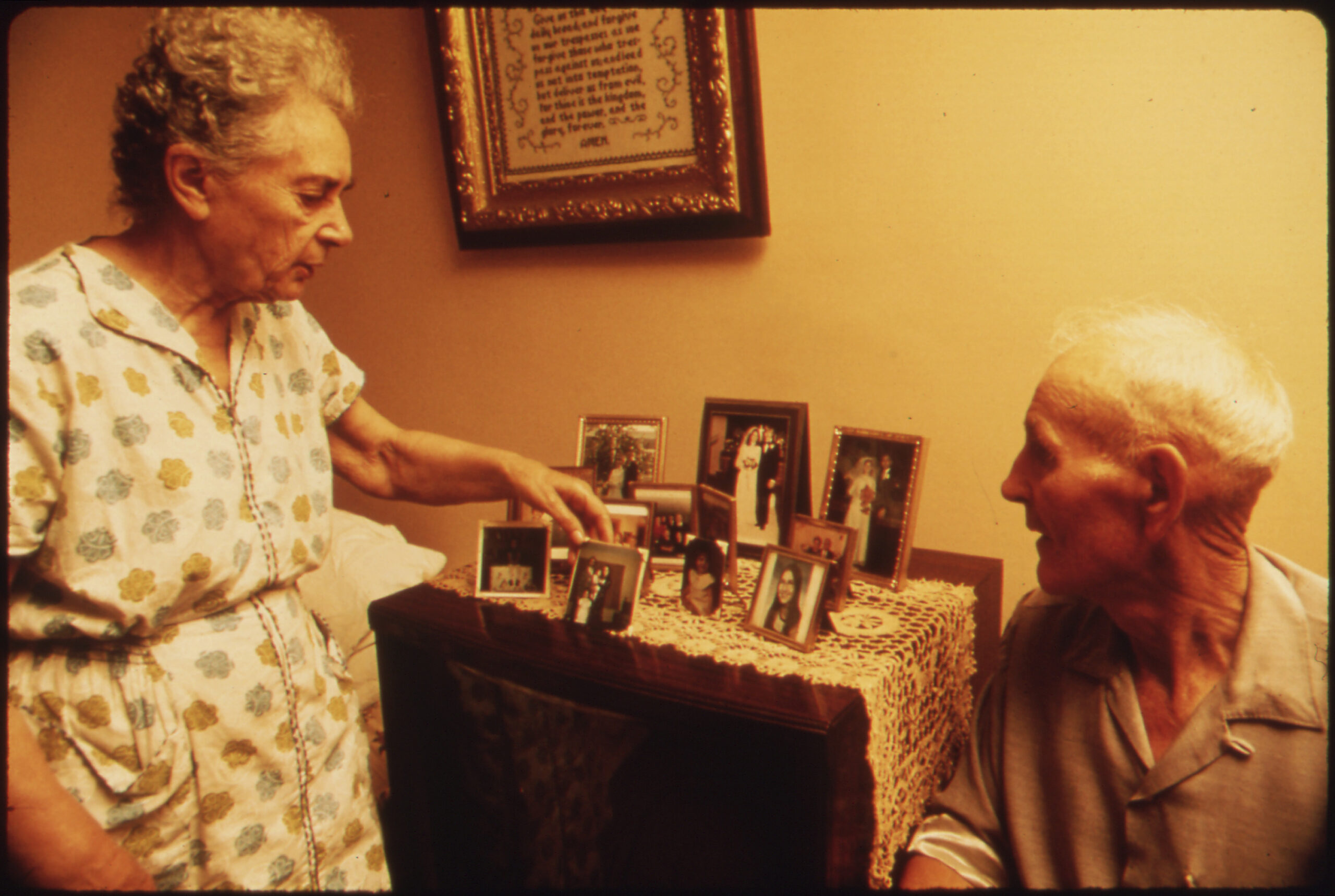
Look at the photographs, keepsakes, and heirlooms your family has preserved. Maybe you have a baby blessing or confirmation outfit, a quilt your mother or grandmother gave you, a necklace that belonged to your mother, or, if you’re lucky, a box of handwritten letters—or, even better, a great-aunt’s diary.
These things are part of what you already have available to you. They may contain clues themselves, or the stories associated with them may give you information about your family that you didn’t have before.
And you don’t necessarily have to physically possess something for it to be useful. Your sister may have the Family Bible. Your mother may have the photographs. A cousin may have your grandfather’s pocket watch. What matters at this point is knowing what exists and, when possible, who has it.
The goal isn’t to prove every story associated with every object. It’s to find out what your family has already preserved before you begin looking for more.
Ask Your Family What They Know
Once you’ve written down what you know and documented what you already have, talk with your family.
Ask your parents, grandparents, siblings, aunts, uncles, cousins, and other relatives what they know. Ask about the people they remember, the places your family lived, the stories they were told, and the photographs, documents, and heirlooms they may have.
Remember, you’re collecting information. Their memories don’t have to be perfect, and you don’t have to assume that every story is completely accurate. Record what they tell you, and make sure you note who the information came from. Later, you can investigate and verify the details.
But collect those memories while you can.
Eventually, memories fade. And eventually, unfortunately, the people who hold those memories will be gone too.
The goal is to preserve what they know while you still have the opportunity to ask.
If you’re not sure what questions to ask or how to organize the information you collect, Start With What You Know: Capture Your Family Stories can help. It walks you through the process step by step, with worksheets designed to help you gather what your family already knows.
What If You Don’t Know Very Much?
Maybe you’re reading all of this and thinking, “But I don’t know very much about my family. How am I supposed to start?”
You probably know more than you think you do.
You’ve lived your own life. You’ve experienced the people who have been part of it. You have memories, names, places, relationships, stories, and experiences—even if you don’t yet know how all of those pieces fit together.
And if all you know is yourself, that’s enough.
Start with what you know about your own life. Then add whatever you know about the people immediately connected to you. Maybe you know your parents’ names but little else. Maybe you know something about your siblings but nothing about your grandparents. That’s okay. Start with what you have.
You don’t need to know very much about the generations before you in order to begin discovering them.
You just need somewhere to start.
Start with yourself. Add the people and information you do know, and then begin working backward from there.
Maybe you have no idea where your parents were born. Maybe all you know is that your mother’s name was Betty and your father’s name was Bob.
You don’t even know whether Betty was actually Elizabeth or whether Bob was actually Robert. Nobody ever called them anything except Betty and Bob.
That’s okay.
Don’t fill in the blanks with what you think their names might have been. Start with what you actually know: Betty and Bob.
It may not seem like much, but it gives you a point of reference. You aren’t starting with nothing anymore.
You’re starting with Betty and Bob.
And that’s enough to give you somewhere to begin.
Start With What You Remember
Maybe you don’t know everything about yourself. You may even be one of the few people who doesn’t know exactly where or when you were born.
That’s okay. Start with the things you do know.
What do you remember?
Our memories aren’t perfect, so treat what you remember as information rather than automatically assuming every detail is correct. But those memories can give you places to begin looking.
Maybe you remember the school you attended, a doctor you visited, a neighborhood where you lived, or other people who were part of your life. Those memories can point you toward records, people, places, and other sources that may help you reconstruct information you don’t currently know.
Researching your own recent past can sometimes be surprisingly difficult. Privacy restrictions may limit access to some recent records, and you may need to contact institutions directly, ask other people for help, or find another way to document what you remember.
But you still aren’t starting with nothing.
Your memories give you clues. Treat them as information that still needs to be evaluated, and use them to help determine where to look next.
Find the Edge Pieces First
My family has always loved jigsaw puzzles. We even had a family philosophy: once a puzzle was opened, we didn’t stop until the whole thing was finished.
It was a slightly silly family tradition, but there is one part of it that has stayed with me.
Whenever we sat down to start a puzzle, the first thing we did was sort through all the pieces. It didn’t matter whether there were 25 pieces or 5,000. We looked for the pieces with flat edges.
Then we used those pieces to build the frame.
What You Know Is the Frame
We’re doing the same thing with genealogy.
We need a frame, and that frame is what we know.
Think of every document and every piece of information you encounter as another puzzle piece. There are countless pieces out there. Most of them don’t belong to our family puzzle at all, and even among the ones that do, we may not yet know where they fit.
But we do know some of the edge pieces.
Those edge pieces are the bits of information we already have—the people, relationships, places, dates, memories, documents, stories, and other information we know about our family. We use those pieces to begin building the frame.
The interesting thing about genealogy is that our puzzle keeps growing. What begins as a 25-piece puzzle may eventually become a 1,000-piece or 5,000-piece puzzle. That’s exactly what we expect.
But as the puzzle expands, we keep coming back to the same principle. Before we try to fill in the unknown pieces in the middle, we start with the edges we can identify.
That’s what starting with what you know does.
You gather the edge pieces you can identify and begin building your frame.
Start With What You Know
You don’t need generations of names, dates, and places before you can begin genealogy. You don’t need to have all the answers, and you don’t need to know where your research will eventually take you.
Start with yourself. Write down what you know, document what you already have, and talk with your family. Some of that information may eventually be confirmed, some may change, and some may lead to questions you haven’t even thought of yet.
You aren’t trying to complete your genealogy before you begin. You’re simply identifying the information you already have.
So where do you start with genealogy?
Start with what you know.